
Module 8: Social Dimensions of Aquaculture Production
Summary / Description Text
This module addresses the social sustainability dimensions of the aquaculture sector. It first examines the sector’s contribution to rural development and employment, presenting data that as of 2022 approximately 22 million people worldwide are directly employed in the aquaculture value chain, with 95% of this occurring in Asia. Examples from Türkiye highlight the regional employment generation potential of facilities in the Aegean, Black Sea and Mediterranean regions, along with findings from field visits.
The module also evaluates working conditions, discussing issues such as long working hours, occupational health and safety risks, the vulnerable position of women and migrant workers, child labor and occupational diseases. It is noted that the sector is among high-risk industries, with accident rates that can exceed those of the mining and construction sectors.
Finally, the aquaculture value chain is examined through its social impacts from hatcheries to feed production, farms to processing and retail. It emphasizes that women are more present particularly in the trade and retail stages of the value chain, while their role is limited in production and processing stages. Empowerment of women, employment of youth and increasing qualified labor are highlighted as key objectives for social sustainability.
Keywords : social sustainability, employment, working conditions, gender equality, youth employment, value chain, occupational health and safety, FAO, UN SDGs.
Learning Outcomes
By the end of this module, participants will be able to:
• Explain the employment generation potential of the aquaculture sector at global and national levels.
• Identify social sustainability issues in the sector (gender inequality, migrant workers, child labor, occupational health and safety).
• Discuss the necessary social policies and practices for improving working conditions.
• Describe the stages of the aquaculture value chain and analyze their social impacts.
• Interpret the importance of integrating women and youth into the sector for social sustainability.
• Explain the relationship between the aquaculture sector and the Sustainable Development Goals.
Presentation File
2. SOCIAL DIMENSIONS OF AQUACULTURE PRODUCTION
2.1. Employment Opportunities
Aquaculture is a sector with high potential for job creation, especially in coastal areas and rural regions, as it provides an alternative source of income. In this context, the aquaculture sector makes a significant contribution to rural development by providing direct and indirect employment to millions of people worldwide. When examining the size of global employment generated by the aquaculture sector, it is observed that in 2022 approximately 22 million people were directly employed in the aquaculture value chain, with 95% of this employment concentrated in the Asian region (FAO, 2024). For fisheries, 2022 employment data show a concentration in Asia, Africa, Latin America, and the Caribbean (FAO, 2024). Table 1 summarizes total aquaculture sector employment data by geographic region between 1995 and 2022, and Table 2 presents fisheries employment data (FAO, 2024).
Table 1. Aquaculture Employment by Region, 1995–2022 (thousand persons) (FAO, 2024)
| 1995 | 2000’s | 2010’s | 2020 | 2022 | Sector’s Share of the Total, 2022 (%) | |
| x 1000 people | ||||||
| Africa | 152 | 241 | 498 | 608 | 648 | 2,9 |
| Asia | 10 561 | 15 124 | 20 866 | 21 039 | 20 900 | 94,6 |
| Europe | 106 | 110 | 106 | 102 | 102 | 0,5 |
| Latin America and the Caribbean | 330 | 415 | 390 | 380 | 413 | 1,9 |
| North America | 11 | 11 | 10 | 11 | 11 | 0,1 |
| Oceania | 9 | 10 | 9 | 10 | 12 | 0,1 |
| Total | 11 169 | 15 912 | 21 879 | 22 151 | 22 086 | |
Table 2. Fisheries Employment by Region, 1995–2022 (thousand persons) (FAO, 2024)
| 1995 | 2000’s | 2010’s | 2020 | 2022 | (%) | |
| Inland Fisheries | ||||||
| x 1000 people | ||||||
| Africa | 1547 | 2418 | 3067 | 3144 | 3133 | 17,5 |
| Asia | 9667 | 12762 | 13210 | 15153 | 14451 | 80,6 |
| Europe | 46 | 40 | 36 | 37 | 32 | 0,2 |
| Latin America and the Caribbean | 262 | 375 | 365 | 301 | 313 | 1,7 |
| North America | 7 | 6 | 4 | 3 | 3 | 0 |
| Oceania | 1 | 1 | 1 | 1 | 3 | 0 |
| Marine Fisheries | ||||||
| x 1000 people | ||||||
| Africa | 1317 | 1602 | 1944 | 2084 | 2155 | 13,7 |
| Asia | 8653 | 10278 | 11339 | 11678 | 11535 | 73,5 |
| Europe | 322 | 241 | 197 | 180 | 175 | 1,1 |
| Latin America and the Caribbean | 946 | 1086 | 1452 | 1495 | 1516 | 9,7 |
| North America | 313 | 188 | 216 | 171 | 226 | 1,4 |
| Oceania | 80 | 77 | 80 | 79 | 78 | 0,5 |
When examining aquaculture sector employment in Türkiye, as of 08 May 2025, 2,232 aquaculture facilities were registered in the system, with the majority concentrated in the Aegean, Black Sea, and Mediterranean regions (T.C. Tarım ve Orman Bakanlığı-Republic of Türkiye Ministry of Agriculture and Forestry, 2025). These facilities, which predominantly utilize concrete pond, net-cage, and earthen pond systems, represent a significant source of employment for Türkiye’s coastal regions.
During field visits to aquaculture facilities in various provinces of Türkiye, managers of the facilities were asked a series of questions and evaluated in terms of social sustainability. In the interview conducted at the Aral Alabalık Facility, it was stated that in winter a total of 12 people were employed (8 men and 4 women) and that temporary personnel were hired in summer, with a total of 25 employees, including 6–7 women. The staff work in areas such as ponds, kitchen, waitering, and cleaning. The production phase is carried out by men, which was explained as being required by the land conditions of these areas. The facility operates with a double-shift system. It was also stated that employees are between the ages of 18 and 60 and that they are satisfied with their workplace and perform their duties with a positive attitude. In addition, the facility’s manager indicated that it is not difficult to find employees.
According to information obtained from the field visit to Melen Water and Seafood, the facility, which operates 24 hours a day, employs a total of 5 people, consisting of a night guard and personnel performing operational tasks during the day. All employees are male, with an age distribution between 20 and 50 years. Work is generally carried out during the daytime. The facility employs individuals who pay attention to hygiene and are knowledgeable about the work being performed. It was also noted that, at times, due to the comprehensive nature of the work, there are periods when it becomes difficult to find workers.
At İznik Dereköy Trout Farm, the production process is labor-intensive, making the workforce a key component. The facility generally employs between 8 and 12 people, with the number rising above 20 in the summer months with the addition of seasonal workers. Most of the employees are men working at the pondside, while women are mainly employed in kitchen and service areas. The age range of employees varies between 18 and 60. Operations are carried out under a double-shift system, and the majority of the workforce is drawn from the local community.
Unlike traditional farms, the personnel structure of the HEKTAŞ facility is based on a highly qualified staff. The planned team consists of agricultural engineers, biologists, environmental engineers, food engineers, and technical operators. A large portion of the personnel will focus on research and development activities. In this way, the facility will not only be a production site but also serve as a training and innovation center. Local employment is also prioritized, with the aim of integrating local youth into the sector through technical training programs. Table 3 presents an evaluation of the social sustainability of aquaculture facilities located in various provinces of Türkiye.
Table 3. Assessment of the Social Sustainability of Aquaculture Facilities in Türkiye
| Facility | Number of Employees | Age Distribution | Work Areas | Work Schedule |
| Aral Trout Farm | Winter: 12 employees (8 men, 4 women); Summer: 25 employees (6–7 women included) | 18–60 | Ponds, kitchen, waitering, cleaning | Double-shift system |
| Melen Water & Seafood | Total of 5 employees (night guard + daytime operational staff) | 20–50 | Facility operation, night guarding | 24-hour continuous operation |
| İznik Dereköy Trout Farm | Winter: 8–12; Summer: exceeds 20 (majority male) | 18–60 | Men: pondside tasks; Women: kitchen and service areas | Double-shift system |
| HEKTAŞ | – | – | Planned team: agricultural engineers, biologists, environmental engineers, food engineers, technical operators | – |
In the study conducted by Nasr-Allah et al. (2020), employment opportunities at different stages of the aquaculture value chain in Egypt, from product supply and production to trade and sales, were evaluated through a survey (Nasr-Allah et al., 2020). The research identified the areas where aquaculture creates job opportunities as hatcheries and feed mills, aquaculture facilities, and areas where products are traded and sold. A schematic representation of the aquaculture sector employment areas investigated within the scope of the study is presented in Figure 1.
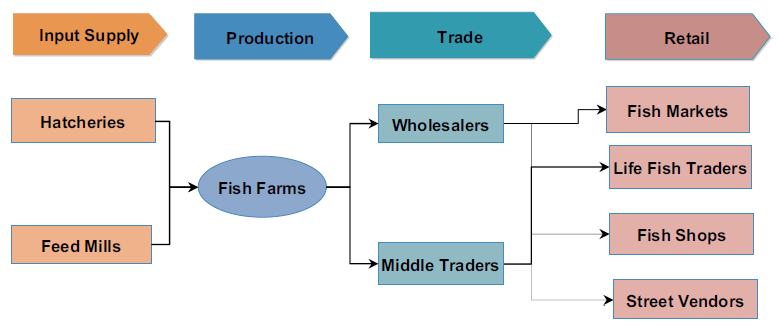 Figure 1. Aquaculture value chain (Nasr-Allah ve ark., 2020 ; Macfadyen ve ark., 2011; Macfadyen ve ark., 2012)
In the study conducted by Nasr-Allah et al. (2020), it was calculated that the aquaculture value chain generates 19.56 full-time equivalent (FTE) jobs per 100 tons of fish produced (Nasr-Allah et al., 2020). This represents the creation of approximately 19.56 full-time job positions for every 100 tons of fish production. The FTE concept provides an understanding of the total workload corresponding to full-time employment by aggregating full-time, part-time, seasonal, and short-term work contributions into a full-time equivalent measure. For the 19.56 FTE jobs generated per 100 tons of fish production, the actual number of employees varies depending on whether they are working full-time or part-time.
According to the data obtained within the scope of the study conducted in Egypt, it is indicated that most employment in the aquaculture sector is dominated by men and individuals over the age of 30, while women and youth are more involved in the fish trade stage (Nasr-Allah et al., 2020). Due to the long hours and physically demanding nature of work at the aquaculture production stage, women and youth cannot take an active role in production. In this context, women are engaged in selling the produced aquatic products as wholesalers and traders. The gender distribution according to employment in different trade segments is presented in Figure 2 (Nasr-Allah et al., 2020).
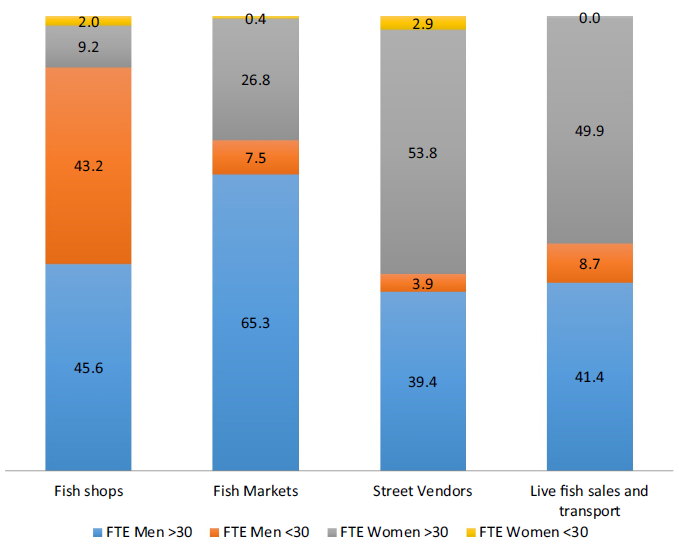
Figure 2. Full-Time Equivalent (FTE) Job Creation Rate by Age and Gender in Different Trade Segments (Nasr-Allah et al., 2020)
Within the framework of Sustainable Development Goal 5, Target 5.a (the seventh sub-target) states that “reforms should be undertaken to give women equal rights to economic resources, as well as access to ownership and control over land and other forms of property, financial services, inheritance and natural resources, in accordance with national laws” (United Nations, 2025). For aquaculture production systems to be managed in line with sustainability principles, it is essential that women and men of all age groups are equally able to work actively in aquaculture production facilities. In addition, they should be in a position to secure their livelihoods and food supply through this form of production.
In a study conducted in Bangladesh, the link between the development of the aquaculture sector and ensuring the active participation of women in the sector was investigated (Shanta et al., 2025). According to the findings obtained within the scope of the study, in the southern coastal regions women working in shrimp and crab production facilities increase their household income, invest in their children’s education, and strengthen their social status (Shanta et al., 2025). However, it is noted that women are mostly employed in low-wage jobs and that the lack of education and experience drives them to work in different fields (Shanta et al., 2025). Therefore, while the aquaculture sector offers solutions to unemployment and migration problems in rural areas, making employment more inclusive in terms of gender and age groups is a critical priority for social sustainability.
To improve the social sustainability of the aquaculture sector and to ensure the integration of women, youth, and small-scale producers into the sector, as well as to promote sustainable aquaculture, the General Fisheries Commission for the Mediterranean (GFCM) has established Aquaculture Demonstration Centres (ADCs) in different countries to carry out knowledge-sharing, technical cooperation, and capacity-building activities (FAO, 2024). Within this framework, the ADCs initially established in Egypt, Romania, and Türkiye have trained more than 4,000 people, thereby encouraging the integration of many individuals into the sector (FAO, 2024). Figure 3 shows the aquaculture demonstration centres located in different regions of the world (FAO, 2025).
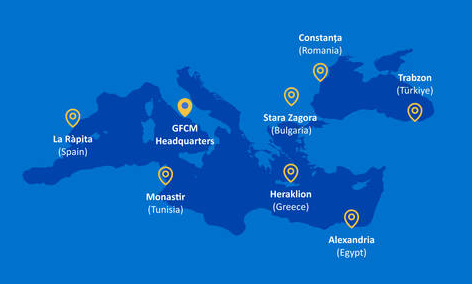
Figure 3. Aquaculture Demonstration Centres Around the World (FAO, 2025)
Through aquaculture demonstration centres, the aim is not only to increase production but also to promote social inclusion, strengthen women’s cooperatives, and support fair working conditions. Therefore, the development of aquaculture in the Mediterranean and the Black Sea represents a critical transformation process not only in terms of environmental and economic sustainability but also from the perspective of social sustainability.
Within the scope of the Aquaculture Demonstration Centres programme, various activities are carried out at the Central Fisheries Research Institute (SUMAE) in Trabzon, Türkiye. In this context, on 1 July 2025 a three-day technical training programme was organized (Republic of Türkiye Ministry of Agriculture and Forestry, Central Fisheries Research Institute Directorate, 2025). The technical training programme, which included experts, researchers, and representatives of producer associations from Türkiye, Bulgaria, and Georgia, aimed to:
- Share best practices in salmon and sturgeon farming covering all production processes from hatchery to harvest;
- Conduct hands-on laboratory training on key topics such as feeding, water quality management, and fish health;
- Provide participants with practical experience through site visits to marine farms;
- Organize informative sessions on permit procedures, governance mechanisms, and sustainability principles in aquaculture activities;
- Increase regional knowledge sharing and develop cooperation opportunities (Republic of Türkiye Ministry of Agriculture and Forestry, Central Fisheries Research Institute Directorate, 2025).
In a study on the EU aquaculture sector, the demographic structure of employment was examined in detail (Nicheva et al., 2022). The data collected for the analysis covered a total of 18 countries: Bulgaria, Croatia, Germany, Greece, the United Kingdom, Denmark, Finland, France, Ireland, Italy, Latvia, Malta, the Netherlands, Portugal, Romania, Slovenia, Spain, and Sweden. According to the findings of the study, the aquaculture farming sector consists predominantly of men (77%), middle-aged workers (40–64 years, 45%), individuals with low/medium education levels (74%), and mostly local employees (85%). Women are more involved particularly in shellfish farming, while youth take on greater roles in certain advanced production technologies. Employees’ education levels are higher in advanced technologies such as recirculating aquaculture systems. These data provide a basis for the EU to develop policies on social sustainability, the participation of youth and women in the sector, and the need for a skilled workforce. The data obtained in the study are summarized in Table 4.
Table 4. Demographic Overview of the EU Aquaculture Sector (Nicheva et al., 2022)
| Indicator | Key Findings |
| Gender | 77% male – 22% female. Women are particularly concentrated in shellfish farming. |
| Age | 45% aged 40–64; 28% aged 25–39; 7% aged 15–24. |
| Education | 39% low, 35% medium, 9% high education. In advanced technologies (recirculation) the proportion with higher education is 20%. |
| Nationality | 85% nationals. Highest share of foreign labor in Greece & Malta. |
| Sectoral Distribution | Shellfish: 52% of employment (lower education, higher share of women). Marine fish: economically the largest. Freshwater: older and more educated workforce. |
| Policy Need | Participation of youth and women, raising education levels, integration of foreign labor. |
2.2. Working Conditions
Fisheries and aquaculture are considered among the most hazardous occupations at the international level (Soykan, 2021). Long working hours, heavy physical workloads, exposure to water and chemicals, occupational accidents, and health problems are the main risks of the sector (FAO, 2024). Table 5 presents the activity branches and hazard classes related to fisheries and aquaculture in Türkiye according to the “Communiqué on Workplace Hazard Classes Regarding Occupational Health and Safety” (Official Gazette of the Republic of Türkiye, No. 28602, 29.03.2013).
Table 5. Activity Branches and Hazard Classes Related to Fisheries and Aquaculture in Türkiye According to the “Communiqué on Workplace Hazard Classes Regarding Occupational Health and Safety” (Official Gazette of the Republic of Türkiye, No. 28602, 29.03.2013)
| NACE Rev.2_Six-Digit Code | NACE Rev.2_Six-Digit Definition | Hazard Class |
| 03 | Fisheries and aquaculture | |
| 03.1 | Fisheries | |
| 03.11 | Marine fishing | |
| 03.11.01 | Marine and coastal fishing (including purse seine fishing, fixed-net fishing) | Hazardous |
| 03.11.02 | Collection of marine shellfish (mussels, lobsters, etc.), molluscs, other marine animals and products (mother-of-pearl, natural pearls, sponges, corals, seaweed, etc.) | Very Hazardous |
| 03.12 | Freshwater fishing | |
| 03.12.01 | Freshwater fishing (rivers, lakes) (trout, carp, catfish, etc.) | Hazardous |
| 03.2 | Aquaculture | |
| 03.21 | Marine aquaculture | |
| 03.21.01 | Fish farming at sea (including sea bream, black bream, mullet, as well as culture fish, fish eggs and fry) | Hazardous |
| 03.21.02 | Other marine aquaculture (mussels, oysters, lobsters, shrimp, crustaceans, shellfish, seaweed, etc.) (excluding fish) | Hazardous |
| 03.22 | Freshwater aquaculture | |
| 03.22.01 | Freshwater fish farming (including ornamental fish, culture fish, fish eggs and fry) | Hazardous |
| 03.22.02 | Freshwater aquaculture of other products (molluscs, shellfish, frogs, etc.) (excluding fish) | Hazardous |
Female workers are particularly vulnerable due to low wages, insecure employment, and health risks. Field studies conducted in Bangladesh have identified that women workers experience skin diseases, musculoskeletal problems, reproductive health issues, and psychological stress as a result of prolonged exposure to water (Shanta et al., 2025). In addition, challenges such as child labour and the employment of migrant workers in low-wage, long-hour, and insecure jobs are also present (FAO, 2024).
In the study conducted by Soykan (2021), accident rates in the fisheries and aquaculture sector were examined, and for 2019 the fatal accident rate was calculated as 1%. In 2019, the fatal accident rate in fisheries and aquaculture exceeded that of other high-risk sectors such as mining (0.34%), construction (0.77%), and transportation (0.80%) (Soykan, 2021). Within the scope of the study, the general fatal accident rate in Türkiye in 2019 was found to be 0.27%, indicating that the fatal accident rate in fisheries and aquaculture was nearly four times the national average (Soykan, 2021).
In the aquaculture sector, workers may be exposed to various risks, including slips and falls on wet and slippery surfaces, falls into water or from heights; injuries caused by the improper use of feeding machines, water pumps, and other mechanical equipment; exposure to chemicals used in production; microbiological risks that can be transmitted from fish to humans; musculoskeletal disorders resulting from lifting heavy loads; and psychosocial risks due to long working hours (Myers & Durborow, 2012). Figure 4 presents the causes and frequencies of occupational accidents occurring in the aquaculture sector, and Table 6 provides an assessment of occupational hazards associated with aquaculture.
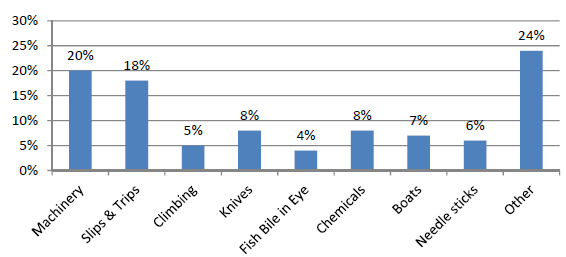
Figure 4. Causes and Frequencies of Occupational Accidents in the Fisheries Sector (Myers & Durborow, 2012).
Table 6. Su Ürünleri Yetiştiriciliğiyle İlişkili Mesleki Tehlikeler (Myers ve Durborow, 2012)
| Categories | Exposures | Potential Consequences |
| Physiological (work design) | Heavy lifting, prolonged standing, awkward postures, repetitive motion, overexertion, lack of visibility | Low back pain, neck and shoulder pain, bursitis, tendonitis, tenosynovitis, carpal tunnel syndrome |
| Physical | Slips and trips, falls from height, falls overboard, transport and trucking, machinery, electricity, fire, heat and cold, diving, noise, vibration, confined spaces, entanglement, underwater entrapment, solar radiation | Injuries, cuts, burns, broken bones, amputation, hypothermia, hyperthermia, drowning, electrocution, injury-related death, asphyxiation, decompression illness, sprains and strains |
| Chemical (toxic, flammable, corrosive, explosive) | Disinfectants, parasiticides, piscicides, fungicides, antifoulants, anesthetics, antibiotics, radon gas from water sources, hydrogen sulfide, carbon monoxide, sulfites, dusts, fumes, styrene, needlesticks, flammabilities, battery explosion | Respiratory illness, burns, cancer, central nervous system effects, birth defects, reproductive effects, poisoning, hematopoietic effects, and lung, eye, or skin irritations |
| Biological | Sharp teeth, spines, aerosolized proteins, bacteria, parasites, skin contact with shellfish and finfish tissues and fluids, enzymes, airborne proteins and endotoxins, fish feed dust | Bites, cuts, punctures and related infections; allergy, asthma, eczema, urticaria (hives), chapped skin, itching. |
| Psychological | High demand and low control situations, remote locations away from family, potential for large fish kills, abusive social environment | Work-related stress |
In the aquaculture sector, there are also many occupational disease risks arising from working conditions. These include musculoskeletal disorders, skin allergies, hearing loss, asthma, poisoning, and various allergic reactions (Myers & Durborow, 2012). Figure 5 presents the number and types of occupational disease cases reported in Norway between 1980 and 1999 related to aquaculture, and Table 7 provides an assessment of occupational diseases occurring in aquaculture on a sectoral basis.
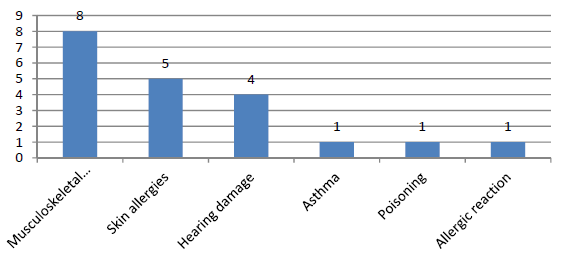 Figure 5. Number and types of occupational disease cases reported in aquaculture in Norway between 1980 and 1999 (Norwegian Labor Inspection Authority, 2001; Myers & Durborow, 2012)
Table 7. Occupational diseases occurring in aquaculture by sector (Aydoğan, 2020)
| Occupational Disease | Fishing Sector | Aquaculture Sector | Processing Sector | Feed Sector |
| Musculoskeletal disorders | + | + | + | + |
| Hearing loss | + | + | + | + |
| Hyperbaric-related disorders (decompression sickness) | + | + | ||
| Eczema (other dermatological diseases) | + | + | + | + |
| Allergy, infection | + | + | + | |
| Digestive system diseases (gastritis, ulcer) | + | + | ||
| Urinary system diseases (prostate, urinary tract, kidney diseases) | + | + | ||
| Nervous system diseases (psychological disorders, depression, Parkinson’s) | + | + | + | + |
| Occupational cancer (lip, skin, lung cancer) | + | + | + | + |
| Occupational asthma | + | + | + |
In order to prevent potential risks in the aquaculture sector, some enterprises provide hygiene training to female workers, supply protective equipment and conduct regular health checks, presenting a positive example in terms of improving working conditions (Shanta et al., 2025). From the perspective of social sustainability, raising occupational health and safety standards in the aquaculture sector, implementing fair remuneration, and developing social protection mechanisms are of great importance. Ensuring the sustainability of employment created in the sector is only possible by organizing working conditions in a safe and fair manner.
2.3. The Value Chain
The aquaculture value chain extends from hatcheries to feed mills, and from farms to processing and retail stages, encompassing a wide structure and generating social impacts at each stage. In this context, seafood production creates a broad social and economic impact area by not only including producers but also covering processing, packaging, distribution, and consumption stages. Research conducted in Egypt shows that employment opportunities within the value chain offer more opportunities for women particularly at the retail stage, whereas female employment remains extremely limited in production and processing stages (Nasr-Allah et al., 2020). This situation highlights the need to strengthen the roles of women in the value chain.
In a study investigating the roles of women in the aquaculture sector in Bangladesh, it was found that vocational training programmes and microcredit support for women enabled them to take more active roles in production and marketing processes (Shanta et al., 2025). Through these initiatives, women not only contribute to household economies but also participate in community decision-making processes through cooperatives. To strengthen aquatic food value chains and ensure their social, economic, and environmental sustainability, the FAO provides support to member countries in various areas (FAO, 2024). Within this scope, the activities carried out by FAO are summarized in Table 8.
Table 8. FAO Support Areas for Aquatic Food Value Chains (FAO, 2024)
| Support Area | Description |
| Compliance with Intergovernmental Agreements | Supporting countries’ compliance with the WTO Fisheries Subsidies Agreement, implementing fisheries management systems, and promoting the fight against illegal, unreported, and unregulated (IUU) fishing. |
| Social Responsibility | Developing social responsibility guidelines in fisheries and aquaculture value chains to address gender equality, decent work, and occupational safety. |
| Traceability and Food Security | Promoting end-to-end traceability systems to ensure product quality, safety, legality, and sustainability. |
| Reduction of Food Loss and Waste | Supporting multidimensional solutions to reduce food loss and waste through multi-stakeholder platforms involving the public and private sectors. |
| Risk and Benefit Analysis | Developing expert consultation processes and policy recommendations on the risks and benefits of seafood consumption in the context of emerging chemical contaminants. |
Studies on the social sustainability of the aquaculture sector reveal that aquaculture provides a source of income and livelihood for rural communities, particularly for women and youth (Nasr-Allah et al., 2020; Shanta et al., 2025). However, the concentration of women in low-paid jobs, the employment of migrant workers under insecure conditions, and deficiencies in occupational health and safety indicate areas of the sector that need improvement in terms of social sustainability. Therefore, ensuring social sustainability within the aquaculture value chain requires not only economic gains but also the empowerment of women, the employment of youth, and the protection of workers’ rights.
Reference
Aydoğan, Ö. (2020). Su Ürünleri Sektöründe Karşılaşılan Meslek Hastalıkları ve Önlemleri. Karaelmas İş Sağlığı ve Güvenliği Dergisi 4(1):55-64. DOI:10.33720/kisgd.558324
Birleşmiş Milletler. (2025, Eylül 7). Türkiye Sürdürülebilir Kalkınma Amaçları. Birleşmiş Milletler. https://turkiye.un.org/tr/sdgs
Nasr-Allah, A., Gasparatos, A., Karanja, A., Dompreh, E. B., Murphy, S., Rossignoli, C.,M., Phillips, M., Charo-Karisa, H. (2020). Employment generation in the Egyptian aquaculture value chain:implications for meeting the Sustainable Development Goals (SDGs). Aquaculture, 734940.
FAO. (2024). The State of World Fisheries and Aquaculture 2024. Blue Transformation in Action. Rome: Food and Agriculture Organization of the United Nations.
Food and Agriculture Organization of the United Nations. (2025). Aquaculture Demonstration Centres. GFCM – General Fisheries Commission for the Mediterranean. https://www.fao.org/gfcm/activities/aquaculture/innovation/adc/en/
Macfadyen, G., Nasr Allah, A.M., Kenawy, D.A.R., Ahmed, M.F.M., Hebicha, H., Diab, A., Hussein, S.M., Abouzied, R.M., Naggar, G., 2011. Value-chain analysis of Egyptian aquaculture. WorldFish Center, Penang.
Macfadyen, G., Nasr-Alla, A.M., Al-Kenawy, D., Fathi, M., Hebicha, H., Diab, A.M., Hussein, S.M., Abou-Zeid, R.M., El-Naggar, G., 2012. Value-chain analysis — An assessment methodology to estimate Egyptian aquaculture sector performance. Aquaculture 362–363, 18–27. https://doi.org/10.1016/J.AQUACULTURE.2012.05.042.
Myers, M.L., Durborow, R.M. (2012). Aquacultural Safety and Health, Health and Environment in Aquaculture, Edited by Dr. Edmir Carvalho, InTech, 385-400
Nicheva, S., Waldo, S., Nielsen, R., Lasner, T., Guillen, J., Jackson, E., Motova, A., Cozzolino, M., Lamprakis, A., Zhelev, K., Llorente, I., (2022). Collecting demographic data for the EU aquaculture sector: What can we learn?. Aquaculture, 559, 738382. https://doi.org/10.1016/j.aquaculture.2022.738382
Norwegian Labor Inspection Authority.(2001) Work Environment and Safety in Aquaculture: Tips for Risk Assessment and Precautionary Measures. A booklet (Translated from Norwegian). Trondheim, Norway: Norwegian Labor Inspection Authority.
Soykan, O. (2021). An analysis on the statistics of occupational accidents in Turkish fisheries and aquaculture sector; 2013-2019 period. Ege Journal of Fisheries and Aquatic Sciences, 38(4), 533-544. DOI: 10.12714/egejfas.38.4.16
Sultana, P., & Thompson, P. (2008). Gender and local floodplain management institutions: A case study from Bangladesh. Journal of International Development, 20(1), 53–68. https://doi.org/10.1002/jid.1411
T.C. Tarım ve Orman Bakanlığı-Republic of Türkiye Ministry of Agriculture and Forestry. (Erişim tarihi: 8 Eylül 2025). Su Ürünleri Yetiştiriciliği. T.C. Tarım ve Orman Bakanlığı. https://www.tarimorman.gov.tr/Konular/Su-Urunleri/Su-Urunleri-Yetistiriciligi
T.C. Tarım ve Orman Bakanlığı Su Ürünleri Merkez Araştırma Enstitüsü Müdürlüğü. (2025, 1 Temmuz). Trabzon Akuakültür Demonstrasyon Merkezinde (ADC Trabzon): Karadeniz için kapasite geliştirme programı. https://arastirma.tarimorman.gov.tr/sumae/Haber/441/Trabzon-Akuakultur-Demonstrasyon-Merkezinde-_adc-Trabzon_-Karadeniz-Icin-Kapasite-Gelistirme-Programi
T.C. Resmi Gazete. (2012). 28602 Sayılı, T.C. Çalışma ve Sosyal Güvenlik Bakanlığı’ndan. İş Sağlığı ve Güvenliğine İlişkin İşyeri Tehlike Sınıfları Tebliği. 29.03.2013. Alıntılanma adresi: https://www.resmigazete.gov.tr/eskiler/2013/03/20130329-4.htm