Project Partners

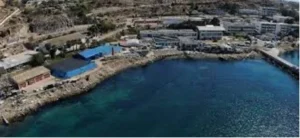
Universidad Católica del Norte
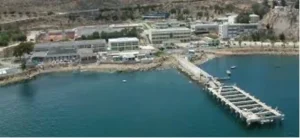
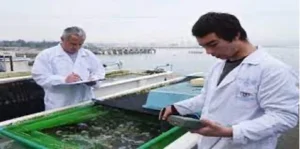
Experimental process for aquaculture sludge management, including water recovery, solar dehydration, and production of agricultural nutrients

Use of settleable solids as a source of agricultural nutrients

  • Fish between 10 g and 500 g in four RAS
  • Distribution of sizes and velocities of solids produced by fish (monthly)
  • Characterization of solids and feces; dissolved excretions
  • Design of a solids mineralizer (nitrate, potassium, calcium, magnesium, sulfates, others)
  • Solar dehydration of sludge

Recirculated water from shrimp and trout cultures as a source of nutrients for hydroponic vegetables

  • Fish in four RAS
  • Shrimp in 6 hydroponic tanks
  • Plants in 6 hydroponic tanks connected to three RAS

Year 1

  • Bio-integrated cultivation trials with trout, shrimp, lettuce, and basil
  • Preparation of systems at UCN and technical high schools
  • Determination of nutrients produced by fish and shrimp
  • Determination of horticultural production
  • Trip to Türkiye and Norway to visit universities and local aquaculture/agriculture activities
  • Preparation of training and validation materials
  • Development of a website plus online training modules translated into Spanish
  • Outline the content of workshops for postgraduate, undergraduate, teachers, and high-school students

Year 2

  • Case studies of bio-integrated systems
  • Systems operating at UCN and high schools
  • Determination of production of fish, shrimp, lettuce, and basil
  • Improvement of training materials based on results

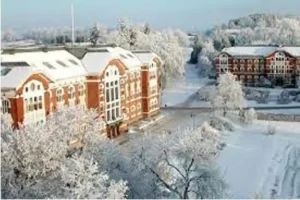
Norwegian University of Life Sciences
Development and implementation of short courses in sustainable aquaculture over four years

  • Target audiences: students, researchers, professionals, entrepreneurs, industry stakeholders, and sectoral government authorities
  • Courses, workshops, online modules, case studies, panel discussions, social media activities, and in-person events

Courses on sustainable feed formulation for aquaculture (on-site and online)

Modules with in-person activities:

  • Feed formulation
  • Small-scale experimental designs
  • Visits to fish farms
  • Case studies

Year 1

  • Course development for four years
  • Plan and promote the course

Year 2

First annual in-person workshop – Use of sustainable ingredients to formulate aquaculture feeds

  • Sustainable feed ingredients (insect meal, macroalgae, others)
  • Low-cost formulation
  • Visits to technology centers, etc.

Year 3

Second annual in-person workshop – Small-scale design to evaluate sustainable feed ingredients for fish

Year 4

Third annual in-person workshop – Production of sustainable ingredients for aquaculture and effects of formulation on the final product

  • Panel discussions with industry experts
  • Visits to macroalgae farms and commercial salmon farms

NMBU’s Role in the Project

  • Provides expertise on developing high-quality feed ingredients for sustainable aquaculture.
  • Conducts research on upcycling of natural resources and side streams from forestry and agriculture into feed components.
  • Integrates scientific outputs from Foods of Norway research and several spin-off projects into the project.
  • Organizes courses and workshops on:
    • Sustainable aquaculture,
    • Circular economy,
    • Feed and food security
      targeting academia, industry, policymakers, and society.
  • Implements knowledge dissemination activities, including social media outreach.
  • Collaborates with the global aquafeed company BioMar to strengthen the research–industry interface.
  • Contributes to the development of scalable feed solutions with low environmental impact.
  • Develops solutions to reduce dependence on imported plant proteins in the European aquaculture sector.
  • Supports the transition from a linear feed model to a circular production model.
  • Conducts studies on microbial-based feed ingredients (yeast, filamentous fungi, bacteria).
  • Develops and tests Pekilo® (Paecilomyces variotii), a fungal protein produced from forestry side streams.
  • Investigates Pekilo’s effects on:
    • Growth performance,
    • Feed conversion ratio,
    • Nitrogen and phosphorus emissions,
    • Gut health.
  • Evaluates Pekilo under commercial field conditions and pathogen challenge trials (notably Moritella viscosa and Tenacibaculum spp.).
  • Supports industrial scale-up of Pekilo production in collaboration with Bio3.
  • Studies fucoidan from brown algae (sugar kelp) for its:
    • Immunomodulatory,
    • Antibacterial and antiviral effects,
    • Modulation of gut microbiota.
  • Assesses fucoidan’s impact on mortality reduction in salmon infection trials.
  • Builds the scientific foundation for healthier fish, reduced environmental impact, and strengthened circular food systems.

Bursa Uludag University

Develop and implement with a circular economy approach and aquaculture sludge recovery

  • Training materials
  • Online modules
  • Sustainability workshops

Year 1

Development of a curriculum and bio-integrated training materials

  • Plan a needs assessment
  • Experimental development with UCN
  • Visits to aquaponic systems in Türkiye
  • Preparation of training materials
  • Preparation of a website including training materials
  • Outline workshop content

Year 2

Workshop development

  • Specific groups of people will be invited to the workshops
  • Experimental results from UCN will be used as part of the training material
  • Topics include circular economy, resource efficiency, organic waste management, energy management, and water recovery and treatment