
Module 15: Water and Energy Efficiency in Aquaponic Systems
Summary / Description Text
This module focuses on the efficient and sustainable use of water and energy resources in aquaponic systems. Aquaponics, as a closed-loop production system integrating aquaculture and hydroponics, offers significant potential for reducing water consumption and optimizing energy inputs while maintaining high production efficiency. Within this context, water and energy efficiency are examined as key determinants of the long-term environmental and economic sustainability of aquaponic systems.
The module first addresses water use in aquaponic systems, including water cycles, water flows, and factors influencing water consumption. Different system configurations (coupled and decoupled systems), hydroponic cultivation techniques (DWC, NFT, and media-based systems), and the effects of fish and plant species, system scale, and environmental conditions on water demand are discussed based on current scientific literature. Strategies to improve water efficiency, such as reducing water losses, strengthening internal system loops, and integrating technologies like reverse osmosis, are also evaluated.
The second part of the module examines energy use in aquaponic systems, focusing on energy-consuming components, factors affecting energy consumption, and seasonal variability. The role of system design, equipment selection, and operational management in reducing energy demand is highlighted. In addition, energy efficiency strategies and the integration of renewable energy sources, including solar and hybrid energy systems, are discussed through recent case studies and research findings.
Overall, this module provides a comprehensive understanding of how integrated water and energy management approaches can enhance the sustainability, resilience, and performance of aquaponic systems.
Keywords
aquaponics, water efficiency, energy efficiency, resource management, renewable energy, sustainable food systems
Learning Outcomes
- To understand water and energy use patterns in aquaponic systems.
- To identify the main factors affecting water and energy consumption in different aquaponic system designs.
- To evaluate strategies for improving water and energy efficiency in aquaponic systems.
- To assess the role of renewable energy integration and smart management approaches in enhancing the sustainability of aquaponic production.
Presentation File
3.8. Water and Energy Efficiency in Aquaponic Systems
Aquaponic systems are closed-loop production systems that integrate fish farming with plant cultivation, offering sustainable approaches that prioritize the efficient use of water and energy resources. In these systems, the continuous reuse of water and the optimization of energy inputs are of critical importance for both reducing environmental impacts and lowering operational costs. Water and energy efficiency are among the key factors determining the long-term sustainability of aquaponic systems.
3.8.1. Water Use in Aquaponic Systems
In aquaponic systems, water is the fundamental component that provides both the living environment for fish and the nutrient source for plants. Effective management of water use is of critical importance for maintaining the biological balance of the system and ensuring the sustainability of production performance. Due to continuous water recirculation, aquaponic systems consume significantly less water compared to conventional greenhouse systems. Evaluations indicate that aquaponic production can reduce on-site water use by approximately 40% during the operational stage (Yuan et al., 2025).
Water use in aquaponic systems largely depends on the type of hydroponic unit employed and the level of recirculation associated with the production method selected in the aquaculture component of the system (Maucieri et al., 2018). The amount of water used in conventional aquaponic systems differs significantly from that of aquaponic systems integrated with recirculating aquaculture systems (RAS). According to previous studies, the volume of water required to produce 1 kg of fish in recirculating aquaculture systems ranges from 0.016 m³ to 0.7 m³, depending on system stocking density (Ahmed & Turchini, 2021). In well-designed and fully closed aquaponic systems, water loss is primarily limited to plant evapotranspiration (Rakocy et al., 2006).
Water use in aquaponic systems varies depending on whether the system is configured as coupled (single-loop) or decoupled (multi-loop). In coupled systems, fish and plant components share the same water loop, and water loss is largely limited to evaporation and plant transpiration (evapotranspiration). In contrast, in decoupled systems, the fish and plant production units are hydraulically separated, resulting in different water requirements for each component and leading to greater variability in overall water use (Palm et al., 2019; Goddek et al., 2019). Overall, daily water losses in aquaponic systems are reported to occur mainly due to evaporation, plant evapotranspiration, and the removal of sludge generated in fish tanks (Maucieri et al., 2018). Water losses in aquaponic systems generally range between 0.05% and 5%, but under extreme conditions, such as high temperatures and high plant surface area ratios, they can increase to as much as 9–41% (Goda et al., 2015; Endut et al., 2014, 2016; Maucieri et al., 2018).
3.8.1.1. Water Cycle and Water Flows in Aquaponic Systems
The water cycle in aquaponic systems is based on the uptake of nutrients generated in fish tanks by plants and the recirculation of treated water back to the fish tanks. Water enriched with fish waste is directed through mechanical and biological filtration units before being conveyed to the plant cultivation areas (Somerville et al., 2014). As plants utilize dissolved nutrients in the water, the water is recovered and returned to the system in a treated form. This closed-loop structure enables the continuous reuse of water, significantly reducing the overall water demand. A schematic illustration summarizing the water cycle in aquaponic systems is presented in Figure 1.
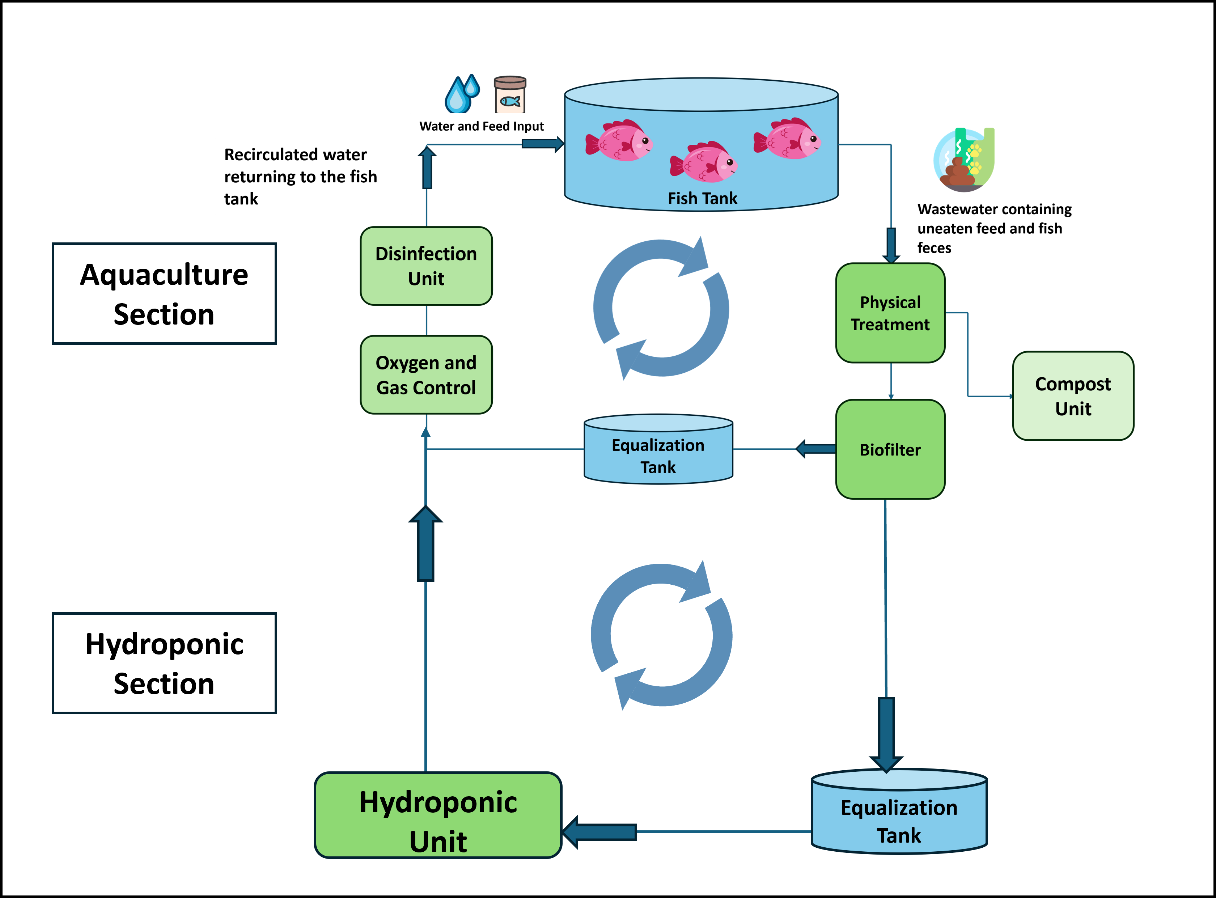
Figure 1. Schematic representation of the water cycle in aquaponic systems
The water consumption per unit of food produced in aquaponic systems is lower than that of conventional greenhouse systems in both rooftop and ground-based applications. This demonstrates that aquaponic systems use water more efficiently and reduce the water footprint per unit of production (Yuan et al., 2025).
3.8.1.2. Factors Affecting Water Consumption in Aquaponic Systems
In aquaponic systems, the majority of total water consumption occurs during the operational phase. This finding indicates that improvement and optimization efforts aimed at enhancing water efficiency should primarily focus on system operating conditions (Yuan et al., 2025). Water consumption in aquaponic systems is influenced by multiple factors, including system type, plant and fish species, stocking density, climatic conditions, and operational scale. In particular, environmental conditions such as temperature and humidity directly affect water losses due to evaporation. In addition, the cultivation technique employed (e.g., media beds, DWC, NFT) and whether the system is installed indoors or outdoors are among the key determinants of total water consumption.
The water exchange rate in aquaponic systems varies depending on the cultivation method; while it can reach up to 250% in conventional systems, it typically ranges between 2–10% in intensive production systems and remains below 1% in modern closed recirculating aquaculture systems (RAS) (Hu et al., 2015; Turcios & Papenbrock, 2014). The water exchange rate in aquaponic systems is influenced by the ratio of hydroponic growing area to fish tank volume. Previous studies have shown that an increase in the hydroponic area–to–fish tank volume ratio leads to higher water exchange rates (McMurtry et al., 1997b). Table 1 presents information on the water consumption rates of aquaponic systems employing different fish and plant species (Maucieri et al., 2018).
Table 1. Water consumption rates of aquaponic systems (Maucieri et al., 2018).
| Hydroponic type | Fish species | Plant species | Water flow | Water consumption (%) | Hydroponic/Fish tank ratio | Reference |
| Floating Bed | Oreochromis niloticus
(Nile tilapia) |
I. aquatica
(Water spinach) |
Constant | 1.40 | 1.9 | Danaher et al., 2013 |
| Floating Bed | Clarias gariepinus
(African catfish) |
I. aquatica
(Water spinach) |
Constant | <5 | 1.6 | Endut et al., 2014 |
| Floating Bed | Oreochromis niloticus
(Nile tilapia) |
L. esculentum
(Tomato)
|
Constant | 2.2 | Hu et al., 2015 | |
| Floating Bed | Misgurnus anguillicaudatus
(Weather loach) |
Asplenium nidus
(Fern)
|
Root in fish tank | 0.10 | 1.3 | Liang and Chien, 2015 |
| Medium-based | Maccullochella peelii peelii
(Murray Cod)
|
L. sativa
(Lettuce) |
Constant | 1.73 | 5.2 | Lennard and Leonard,
2006 |
| Medium-based | Cyprinus carpio
(Common carp)
|
B. chinensis
(Chinese cabbage) |
Constant | 1.80 | 3.5 | Zou et al., 2016b |
| Medium-based | Oreochromis niloticus
(Nile tilapia) |
S. melongena
(Eggplant) |
Constant | 15 | 2.1 | Graber and Junge, 2009 |
| NFT | Oreochromis niloticus
(Nile tilapia) |
L. esculentum
(Tomato) |
Constant | 3.83 | 1.4 | Kloas et al., 2015 |
| NFT | Oreochromis niloticus
(Nile tilapia) |
C. sativus, L. Sativa
(Cucumber and lettuce) |
Constant | 0.90 | 1.2 | Castillo-Castellanos
et al., 2016 |
| NFT | Oreochromis niloticus
(Nile tilapia) |
L. sativa
(Lettuce) |
Constant | 1.40 | 28.4 | Al-Hafedh et al., 2008 |
| NFT | Maccullochella peelii peelii
(Murray Cod) |
L. sativa
(Lettuce) |
Constant | 1.97 | 5.2 | Lennard and Leonard,
2006 |
Table 1 presents a comparative overview of water flow rates, daily water consumption, and hydroponic area–to–fish tank ratios across different aquaponic system designs (floating raft, media-based, and NFT), depending on the fish and plant species employed (Maucieri et al., 2018). The findings indicate that water use characteristics vary considerably according to system type and the cultivated plant species. In particular, NFT systems tend to achieve higher hydroponic area–to–fish tank ratios, whereas this ratio remains more balanced in media-based systems. In addition, plant species and water flow regimes play a decisive role in determining daily water consumption, with systems cultivating leafy vegetables such as lettuce exhibiting relatively lower water use values. These results highlight that improving water efficiency in aquaponic systems requires the integrated consideration of system design, plant selection, and water flow parameters.
Within the total water consumption of aquaponic systems, the proportion allocated to irrigation water exhibits a more balanced distribution due to the closed and recirculating nature of the system. The reuse of water within the system and the transport of nutrients through the same water body reduce irrigation water demand, thereby contributing to improved overall water use efficiency (Yuan et al., 2025).
3.8.1.3. Strategies to Improve Water Efficiency in Aquaponic Systems
Water efficiency in aquaponic systems is not solely determined by the total volume of water used, but is directly related to how water is managed within the system and the extent to which it can be reused. In particular, practices aimed at maintaining water quality in recirculating aquaculture systems may lead to water and nutrient losses. Therefore, evaluating strategies that reduce water losses and strengthen internal system cycles is of great importance for the sustainability of aquaponic systems.
In aquaponic systems and, more broadly, in recirculating aquaculture systems (RAS), periodic water discharge is commonly applied to maintain water quality. However, this approach results in the removal not only of water but also of dissolved nutrients from the system, thereby negatively affecting both water and nutrient efficiency. Goddek and Keesman (2020) report that in standard RAS operations, maintaining water quality may require the daily removal of approximately 12% of system water, which results in substantial losses of both water and nutrients.
One of the strategies proposed to mitigate this issue is the integration of reverse osmosis (RO) technology into aquaponic systems. Through the use of RO systems, the volume of water that needs to be discharged from the system can be significantly reduced; treated and demineralized water can be returned to the aquaculture unit, thereby largely closing the water loop. Goddek and Keesman (2020) demonstrated that the integration of RO systems can largely eliminate the need for periodic water discharge, thereby improving water use efficiency and reducing nutrient losses. This approach offers significant potential for enhancing the sustainability of aquaponic systems, particularly in regions with limited water resources.
Addressing water and energy efficiency together in aquaponic systems is a crucial approach for achieving sustainable improvements in overall system performance. Reducing the daily water circulation time in aquaponic systems from 24 hours to approximately 11–13 hours can be implemented without causing negative effects on water quality or plant growth; this approach contributes to lower energy consumption and, indirectly, to enhanced water efficiency (Sreejariya et al., 2016; Maucieri et al., 2018). Design and operational optimizations in aquaponic systems can lead to additional reductions in total water consumption. In particular, improvements in system parameters have been shown to enable significant savings in water use (Yuan et al., 2025).
Aquaponic systems are among the production models that contribute to the sustainable management of water resources not only at the facility scale but also when evaluated at broader spatial scales. The expansion of aquaponic systems at the urban scale can help reduce the water footprint not only at individual facilities but across cities as a whole. Increased local production and shorter supply chains further alleviate pressure on water resources (Yuan et al., 2025).
3.8.2. Energy Use in Aquaponic Systems
Aquaponic systems require various energy inputs to ensure continuous water circulation and to maintain suitable living conditions. Energy use has a direct impact on both the environmental footprint and the economic sustainability of the system. Energy use in aquaponic systems plays a critical role in both system sustainability and operational costs. In industrial aquaponic facilities, the distribution of energy sources used for electricity generation has shown a significant shift between 2005 and 2024. During this period, the share of fossil fuels such as coal and natural gas has decreased, while the use of renewable energy sources, including wind, solar, and hydropower, has steadily increased. This transformation indicates that energy use in aquaponic systems is increasingly shifting toward more environmentally friendly and sustainable solutions, highlighting the growing importance of energy efficiency strategies. Figure 2 illustrates the percentage distribution of electricity generation in industrial aquaponic systems in 2004, 2016, and 2024 (Li et al., 2026; Energy A., 2017).
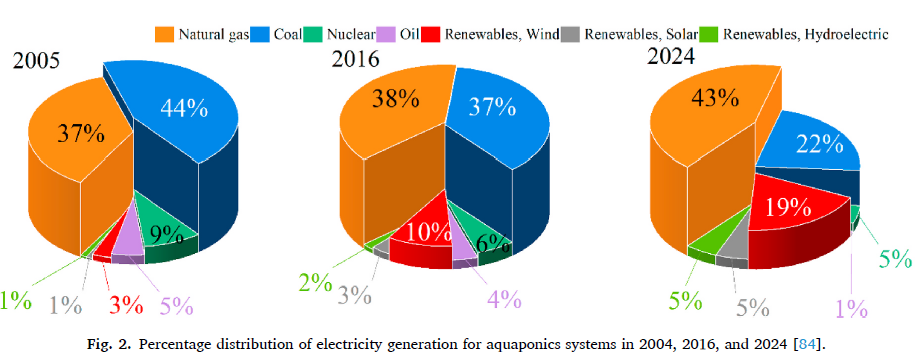 Figure 2. Percentage distribution of electricity generation in industrial aquaponic systems in 2004, 2016, and 2024 (Li et al., 2026; Energy A., 2017).
3.8.2.1. Energy-Consuming Components in Aquaponic Systems
The primary energy-consuming components in aquaponic systems include water pumps, aeration and oxygenation equipment, filtration units, lighting systems, and heating and cooling devices (Channa et al., 2024a; Li et al., 2026; Zhao et al., 2024). These components generally require continuous energy supply to ensure uninterrupted system operation. In particular, water pumps and aeration systems account for a substantial proportion of total energy consumption.
3.8.2.2. Factors Affecting Energy Consumption in Aquaponic Systems
Energy consumption in aquaponic systems varies significantly depending on factors such as local climatic conditions and the temperature requirements of the selected fish and plant species (Channa et al., 2024b). Poorly planned system designs can lead to unnecessary energy losses and increased operational costs.
Studies indicate that energy consumption in aquaponic systems exhibits significant seasonal variability (Li et al., 2026). Energy use varies seasonally, with water circulation pumps accounting for the majority of energy demand during summer months, while heat pumps and heating elements dominate energy consumption in winter; aeration systems also contribute substantially to total energy use throughout the year. Therefore, effective management of environmental parameters and equipment is required to maintain suitable growth conditions for fish and plants while reducing operational costs.
3.8.2.3. Energy Efficiency Strategies and Renewable Energy Integration
To enhance energy efficiency, the use of energy-efficient equipment, the adoption of gravity-assisted flows in system design, and the implementation of automation systems are recommended (Zhao et al., 2024). In addition, integrating renewable energy sources such as solar energy into aquaponic systems reduces dependence on fossil fuels and improves their environmental performance. Renewable energy integration emerges as a particularly important approach for strengthening the sustainability of aquaponic systems, especially in rural and off-grid areas.
Energy efficiency in aquaponic systems depends on the integrated and coordinated management of energy-consuming components such as pumps, aeration, heating/cooling, and lighting. Li et al. (2026) proposed an energy management model that combines real-time monitoring and smart control strategies with renewable energy systems. This approach improved the alignment between energy demand and renewable energy generation, resulting in a reduction in total energy consumption of approximately 18–30%. The results demonstrate that smart energy management enables more sustainable aquaponic operations without negatively affecting production (Li et al., 2026).
Among innovative approaches aimed at improving energy efficiency in aquaponic systems, the use of system water as a thermal energy buffer has gained increasing attention. Channa et al. (2025a) developed a dynamic control algorithm based on preheating water during periods of high solar energy generation and utilizing the stored thermal energy when energy supply is limited. This approach enhances renewable energy integration without the need for additional energy storage systems such as batteries and reduces reliance on grid electricity. Simulation results indicate that the proposed method can achieve annual energy savings ranging from 13.3% to 26.9% compared to conventional temperature control strategies (Channa et al., 2024a). The system diagram proposed in the study is presented in Figure 3 (Channa et al., 2025a).
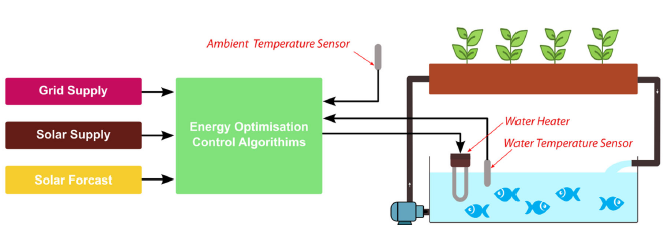
Figure 3. System diagram of the optimized aquaponic system. The fish tank and media bed used for plant cultivation are shown on the right, while the energy sources are located on the left. A submersible water heater is employed for water heating, and ambient and water temperature sensors are used to monitor environmental conditions (Channa et al., 2024a).
Enhancing energy efficiency in aquaponic systems depends not only on the use of energy-efficient equipment but also on the integrated and optimized management of renewable energy sources. Karimanzira and Rauschenbach (2018) proposed a hybrid energy system for aquaponic facilities incorporating photovoltaic systems, wind turbines, biomass, solar collectors, and cogeneration units, and demonstrated that such a system can be managed through an optimization model. The developed model aims to increase the share of renewable energy use and reduce dependence on the grid by jointly addressing different energy demands, including electricity, heating, and pumping. Implementation at a real aquaponic facility showed that, through appropriate energy prioritization and storage management, energy demand could be met continuously and that renewable energy sources significantly improved overall system performance (Karimanzira & Rauschenbach, 2018). Figure 4 presents the hybrid energy system proposed in the study by Karimanzira and Rauschenbach (2018).
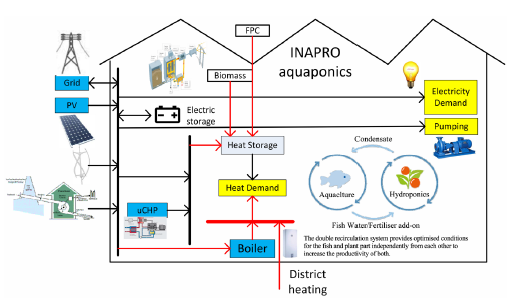
Figure 4. Hybrid energy system proposed by Karimanzira and Rauschenbach (2018).
When the studies discussed above are considered collectively, it becomes evident that energy efficiency in aquaponic systems cannot be achieved through a single approach; rather, it requires the combined application of different strategies depending on system scale, operating conditions, and energy demand structure. The literature indicates that energy efficiency in aquaponic systems can be enhanced through various strategies tailored to system scale and energy demand characteristics. Approaches such as renewable energy integration, smart control, and optimization of equipment operation provide effective outcomes across different energy-consuming components. Therefore, a comparative evaluation of the key studies is essential for identifying appropriate energy efficiency strategies. Table 2 presents a synthesis of the approaches and main findings of four representative studies reviewed in the literature (Channa et al., 2025a; Karimanzira & Rauschenbach, 2018; Li et al., 2026; Zhao et al., 2024).
Table 2. Approaches and key findings of four major studies reviewed in the literature
| Study | System Scale / Type | Energy Components Addressed | Applied Approach | Key Findings | Energy Management Focus |
| Channa et al. (2025a) | Simulation-based aquaponic system | Heating (water temperature) | PV integration + use of water as a thermal energy buffer | Annual energy savings of 13.3–26.9%; enhanced renewable integration without battery storage | Energy efficiency strategies, renewable energy integration |
| Karimanzira & Rauschenbach (2018) | Industrial aquaponic facility | Electricity, heating, pumping | Hybrid renewable energy system + optimization model | Reduced grid dependency; continuous supply of energy demand | Energy management, multi-source renewable systems |
| Li et al. (2026) | Sensor- and control-based aquaponic system | Pumps, aeration, heating/cooling, lighting | Real-time monitoring + model predictive control (MPC) | 18–30% reduction in total energy consumption | Smart energy management, factors affecting energy consumption |
| Zhao et al. (2024) | Urban aquaponic facility | LED lighting, pumps, climate control | Optimization of equipment operating schedules (DSM) | 25.8% reduction in electricity costs | Component-based energy efficiency |
References
Ahmed, N., & Turchini, G. M. (2021). Recirculating aquaculture systems (RAS): Environmental solution and climate change adaptation. Journal of Cleaner Production, 297, 126604. https://doi.org/10.1016/J.JCLEPRO.2021.126604
Al-Hafedh YS, Alam A, Beltagi MS, 2008. Food production and water conservation in a recirculating aquaponic system in Saudi Arabia at different ratios of fish feed to plants. J. World Aquacult. Soc. 39:510-20.
Castillo-Castellanos D, Zavala-Leal I, Ruiz-Velazco JMJ, Radilla- García A, Nieto-Navarro JT, Romero-Bañuelos CA, González- Hernández J, 2016. Implementation of an experimental nutrient film technique-type aquaponic system. Aquacult. Int. 24:637-46.
Channa, A. A., Munir, K.,. Hansen, M., Tariq, M.F. (2024a). Energy optimisation in aquaponics—Integrating renewable source and water as energy buffer for sustainable food production. Energy Science & Engineering, 2025; 13:2098–2111 https://doi.org/10.1002/ese3.70038
Channa, A. A., Munir, K., Hansen, M. and Tariq, M. F. (March 2024b) “Optimisation of Small‐Scale Aquaponics Systems Using Artificial Intelligence and the IoT: Current Status, Challenges, and Opportunities,” Encyclopedia 4, no. 1: 313–336, https://doi.org/10.3390/encyclopedia4010023.
Danaher JJ, Shultz RC, Rakocy JE, Bailey DS, 2013. Alternative solids removal for warm water recirculating raft aquaponic systems. J. World Aquacult. Soc. 44:374-83.
Endut A, Jusoh A, Ali NA, 2014. Nitrogen budget and effluent nitrogen components in aquaponics recirculation system. Desalin. Water Treat. 52:744-52.
Endut A, Lananan F, Abdul Hamid SH, Jusoh A, Wan Nik WN, 2016. Balancing of nutrient uptake by water spinach (Ipomoea aquatica) and mustard green (Brassica juncea) with nutrient production by African catfish (Clarias gariepinus) in scaling aquaponic recirculation system. Desalin. Water Treat. 57:29531-40.
Energy, A. (2017). 2017 Corporate Sustainability Report.
Goda AMA, Essa MA, Hassaan MS, Sharawy Z, 2015. Bio Economic features for aquaponic systems in Egypt. Turk. J. Fish. Aquat. Sci. 15:525-32.
Goddek,S., Joyce, A., Wuertz, S., Körner, O., Bläser, I., Reuter, M., Keesman, K. J. (2019). Decoupled Aquaponics Systems. In S. Goddek, A. Joyce, B. Kotzen, & G. M. Burnell (Eds.), Aquaponics Food Production Systems: Combined Aquaculture and Hydroponic Production Technologies for the Future (pp. 201-229). Springer.
Goddek, S., & Keesman, K. J. (2020). Improving nutrient and water use efficiencies in multi-loop aquaponics systems. Aquaculture International, 28, 2481-2490. https://doi.org/10.1007/s10499-020-00600-6
Graber A, Junge R, 2009. Aquaponic systems: nutrient recycling from fish wastewater by vegetable production. Desalination 246:147-56.
Hu Z, Lee JW, Chandran K, Kim S, Brotto AC, Khanal SK, 2015. Effect of plant species on nitrogen recovery in aquaponics. Bioresour. Technol. 188:92-8.
Karimanzira, D. and Rauschenbach, T. (2018) Optimal Utili-zation of Renewable Energy in Aquaponic Systems. Energy and Power Engineering, 10, 279-300. https://doi.org/10.4236/epe.2018.106018
Kloas W, Groß R, Baganz D, Graupner J, Monsees H, Schmidt U, et al., 2015. A new concept for aquaponic systems to improve sustainability, increase productivity, and reduce environmental impacts. Aquacult. Environ. Interact. 7:179-92.
Lennard WA, Leonard BV, 2006. A comparison of three different hydroponic sub-systems (gravel bed, floating and nutrient film technique) in an Aquaponic test system. Aquacult. Int. 14:539-50.
Liang JY, Chien YH, 2015. Effects of photosynthetic photon flux density and photoperiod on water quality and crop production in a loach (Misgurnus anguillicandatus) – nest fern (Asplenium nidus) raft aquaponics system. Int. Biodeter. Biodegr. 102:214-22.
Li, D., Guo, X., Zhang, S. (2026). Energy-saving operation and control strategies for sustainable industrialized aquaponics: A review. Renewable and Sustainable Energy Reviews, 226, 116400. https://doi.org/10.1016/j.rser.2025.116400
McMurtry MR, Sanders DC, Cure JD, Hodson RG, Haning BC, St Amand EC, 1997b. Efficiency of water use of an integrated fish/vegetable co-culture system. J. World Aquacult. Soc. 28:420-8.
Palm, H., Knaus, U., Appelbaum, S., Strauch, S.M., Kotzen B. (2019). Coupled Aquaponics Systems. In S. Goddek, A. Joyce, B. Kotzen, & G. M. Burnell (Eds.), Aquaponics Food Production Systems: Combined Aquaculture and Hydroponic Production Technologies for the Future (pp. 163-199). Springer.
Rakocy, J. E., Masser, M. P., & Losordo, T. M. (2006). Recirculating aquaculture tank production systems: Aquaponics—integrating fish and plant culture. SRAC Publication.
Somerville, C., Cohen, M., Pantanella, E., Stankus, A., & Lovatelli, A. (2014). Small-scale aquaponic food production: Integrated fish and plant farming. FAO.
Sreejariya P, Raynaud T, Dabbadie L, Yakupitiyage A, 2016. Effect of water recirculation duration and shading on lettuce (Lactuca sativa) growth and leaf nitrate content in a commercial aquaponic system. Turk. J. Fish. Aquat. Sci. 16:311-9.
Turcios AE, Papenbrock J, 2014. Sustainable treatment of aquaculture effluents – what can we learn from the past for the future? Sustainability 6:836-56.
Zhao, W., Liu, C., Li, D., Zheng, Y. (2024). Energy-saving techniques in urban aquaponics farms by optimizing equipment operating scheme. Aquaculture, 587, 740873
Zou Y, Hu Z, Zhang J, Xie H, Guimbaud C, Fang Y, 2016b. Effects of pH on nitrogen transformations in media-based aquaponics. Bioresour. Technol. 210:81-7.