
Module 16: General Evaluation
Summary / Description Text
This module provides a comprehensive evaluation of sustainable aquaculture production systems by integrating the environmental, technical, and managerial dimensions addressed throughout the training program. Rather than focusing on a single technology or production model, the module emphasizes a holistic systems-based approach in which production system selection, water and energy management, resource efficiency, and operational strategies are evaluated together.
The module synthesizes the key concepts discussed in previous modules, highlighting how sustainability in aquaculture is shaped by the interaction between system design, species requirements, water quality management, treatment technologies, and social considerations. Open, semi-closed, and closed production systems are assessed in terms of their resource use, environmental impacts, and management requirements, demonstrating that sustainability is context-dependent and closely linked to local conditions and operational capacity.
Special emphasis is placed on aquaponic systems as integrated production models that support circular resource management through the internal reuse of water and nutrients. The balance between fish, plants, and microorganisms, as well as the interactions between water, energy, and nutrient flows, are evaluated as critical factors determining system stability and long-term sustainability. The module also highlights that improvements in water efficiency may be accompanied by increased energy demand, underlining the need for integrated decision-making rather than single-indicator assessments.
Overall, this module aims to strengthen participants’ ability to critically evaluate aquaculture and aquaponic systems from a sustainability perspective, supporting informed and responsible decision-making for the long-term management of aquaculture production systems.
Keywords
sustainable aquaculture, systems approach, resource efficiency, aquaponics, circular resource management, integrated production systems.
Learning Outcomes
By the end of this module, participants will be able to:
- Understand sustainable aquaculture management as a multidimensional and integrated process.
- Evaluate aquaculture production systems by considering environmental, technical, and managerial interactions.
- Assess the sustainability potential of aquaponic systems within the framework of circular resource management.
- Interpret water, energy, and nutrient interactions as key determinants of long-term system performance and sustainability.
Presentation File
3.9. General Evaluation
3.9.1. Sustainable Management of Aquaculture Systems
Sustainable management of aquaculture production systems refers to the process of planning, operating, and monitoring aquaculture activities in a manner that minimizes pressure on environmental resources, supports social sustainability, is economically viable, and ensures the continuity of production in the long term. This approach is not limited to increasing production volumes; rather, it is based on a production concept in which water, energy, and nutrient resources are used efficiently, environmental impacts are kept under control, and the biological balances of the system are maintained.
In this context, sustainability is not a goal that can be achieved through a single technical solution; rather, it represents a holistic management approach that requires the integrated evaluation of production system selection, the biological requirements of cultured species, water resources, applied technologies, and operational strategies. Within this framework, the management of aquaculture production systems can be summarized as illustrated in Figure 1.
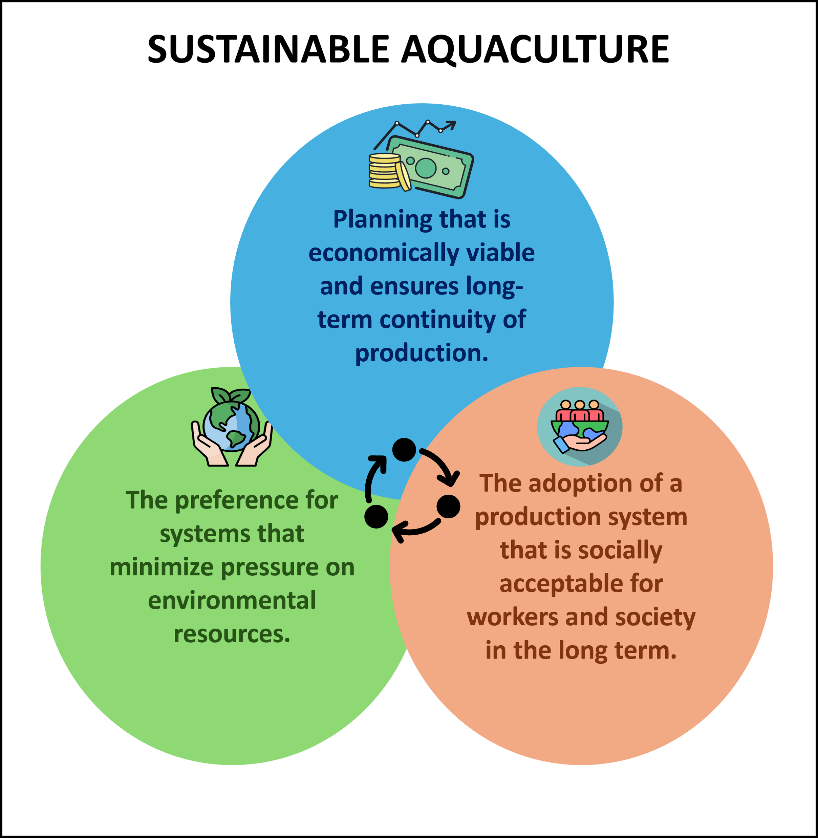
Figure 1. Sustainable management of aquaculture production systems
The concept of sustainable aquaculture management has been defined within this training program particularly in the context of the production methods addressed in Module 1, the water footprint and wastewater management in aquaculture production examined in Module 6, the carbon footprint and the management of generated wastes in aquaculture production discussed in Module 7, and the social components of aquaculture production analyzed in Module 8. These evaluations, conducted through the environmental impacts, resource use, and social effects of open, semi-closed, and closed systems, demonstrate that sustainability is directly linked to system selection. Similarly, FAO (2024) defines sustainable aquaculture as the holistic management of production systems that minimize environmental impacts while being economically viable and socially acceptable.
3.9.2. Modules Evaluation from a Sustainability Perspective
When the developed modules are examined, it is evident that the sustainable management of aquaculture production systems is fundamentally based on systems thinking. Each of the open, semi-closed, and closed production systems offers different advantages and limitations in terms of water use, waste generation, energy demand, and environmental impact. Therefore, rather than the concept of a “best system,” the approach of identifying the “most appropriate system for the given conditions” becomes prominent.
The temperature, dissolved oxygen, pH, and nutrient requirements of cultured species directly affect the performance of the selected production system. This indicates that species selection and system design cannot be considered independently of one another. The biological, technical, and environmental information addressed in the modules demonstrates that the foundation of sustainable aquaculture is built upon the correct matching and balance of multiple parameters.
Throughout the training program, the developed modules address sustainable aquaculture management through different components. While Module 4 emphasizes the role of equipment and technologies used in production on environmental performance, Modules 5, 6, and 13 indicate that water quality and operational processes are critical for the continuity of sustainability. This approach is consistent with Badiola et al. (2012), who emphasize that sustainability cannot be achieved through single technical solutions but rather through an integrated systems approach.
3.9.3. Production System Selection and Sustainability
The sustainability of aquaculture production systems is largely shaped by the selection of the production system. As discussed in Module 2 of this training program, open systems, semi-closed systems, and closed/recirculating aquaculture systems (RAS) differ significantly in terms of water use, waste generation, environmental impact, and management requirements. These differences demonstrate that sustainability begins at the system design stage.
The characteristics of water resources examined within the scope of Module 5 further highlight the impact of production system selection on sustainability. The physical and chemical properties of different water sources, such as surface waters, groundwater, or seawater, constrain the applicable production systems, and water quality directly affects the long-term sustainability of the system.
When the impact of production system selection on sustainability is evaluated together with the biological requirements of species discussed in Module 3, this relationship becomes clearer. The tolerance of cultured species to parameters such as temperature, dissolved oxygen, pH, and nitrogen compounds constitutes a fundamental factor determining the operational flexibility of the system. Therefore, species–system mismatch leads to outcomes such as increased stress, elevated disease risk, and yield losses, thereby making sustainable production more difficult.
The equipment and technologies discussed in Module 4 are addressed as supporting elements that enable the selected production system to be operated in a sustainable manner. Technologies related to filtration, aeration, and water circulation contribute to the reduction of environmental impacts in closed and semi-closed systems; however, the energy requirements and technical operational demands of these systems demonstrate that sustainability is not only an environmental issue but also a managerial one.
Module 5, which addresses water quality management, and Module 6, which focuses on the water footprint and wastewater management in aquaculture, demonstrate that the sustainability of the selected production system is achievable through effective management of water use, continuous monitoring of water quality, and appropriate wastewater management. In this context, water quality and the efficient management of water use constitute fundamental elements of sustainable aquaculture production. Monitoring the water quality parameters discussed in Module 5 ensures the maintenance of system stability, while the water footprint approach addressed in Module 6 highlights the need to evaluate production systems in terms of water consumption and wastewater generation.
The social sustainability dimension addressed within the scope of Module 8 demonstrates that sustainable aquaculture management is not limited to environmental and technical elements alone. Social factors such as working conditions, interaction with local communities, knowledge sharing, and stakeholder participation in production processes are emphasized as being decisive for the long-term acceptability and continuity of aquaculture activities. In this context, Module 8 shows that sustainable aquaculture should be evaluated not only in terms of technical efficiency but also in conjunction with principles of social benefit and responsibility.
The innovative aquaponic production systems that integrate plant production with aquaculture, addressed in the subsequent modules (Modules 9–15), demonstrate the sustainable production approach through concrete examples by enabling the reuse of water and nutrients within the system. When properly planned, these systems allow the recovery of water and nutrients within the system, thereby increasing resource efficiency, while also highlighting the importance of selecting production systems based on local conditions and existing capacity.
The water–energy relationship in aquaponic systems examined within the scope of Module 15 demonstrates that the sustainability dimensions of production system selection must be considered together. While water savings can be achieved in closed and integrated systems, energy consumption may increase, indicating that sustainability cannot be evaluated based on a single indicator and that production system selection requires an integrated approach that considers the balance between water, energy, and nutrient resources.
3.9.4. Water Management and Water Quality in Aquaculture
Across all developed modules, water emerges as the central and common element of the system. Water serves not only as a shared living environment for fish, plants, and microorganisms, but also as the primary medium for nutrient transport and circular production. Therefore, sustainable aquaculture management fundamentally requires the protection of water resources and the continuous monitoring of water quality.
It has been frequently emphasized that even small changes in parameters such as water temperature, dissolved oxygen, pH, and nitrogen compounds can significantly affect system performance. This indicates that sustainable management is a dynamic process that requires active monitoring and intervention not only at the design stage but also throughout the operational phase.
Water management and water quality are addressed as common themes across multiple modules within the program. While Module 3 explains the sensitivity of cultured species to water quality parameters, Module 5 details the characteristics of water resources and key quality criteria. In addition, Module 13 emphasizes the importance of continuous water quality monitoring for system stability. The literature likewise frequently states that water quality is one of the fundamental determinants of aquaculture sustainability, as highlighted by Boyd (2015) and Timmons & Ebeling (2013).
3.9.5. Technology and Circular Resource Management
Equipment, treatment units, and automation systems used in aquaculture production are considered supporting tools for sustainable management. Mechanical and biological treatment units, aeration systems, and water circulation ensure both the protection of fish health and the reduction of environmental impacts.
The sludge management and nutrient recovery approaches addressed in the modules demonstrate that the concept of sustainable aquaculture is shifting from a linear production model toward a circular production model. The recovery of materials considered as waste and their reintegration into the nutrient cycle through systems such as aquaponics form the basis of a production model aligned with circular economy principles.
Technologies and treatment units used in aquaculture production are discussed in detail within the scope of Module 4 and Module 14. These modules state that mechanical and biological treatment systems not only improve water quality but also reduce environmental loads. In particular, the sludge management and mineralization approaches addressed in Module 14 demonstrate that aquaculture wastes can be evaluated within the framework of circular resource management. This approach is consistent with Maucieri et al. (2018) and Goddek et al. (2019), who emphasize that aquaculture wastes should be regarded as resources. Some of the technologies and treatment units used in aquaculture production systems are presented in Figure 2.
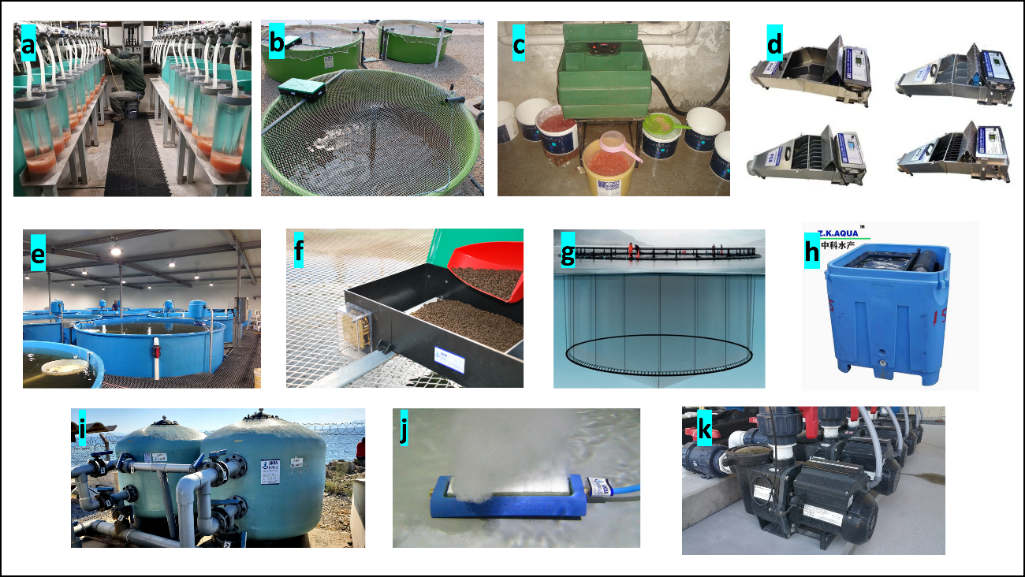
Figure 2. Some of the technologies and treatment units used in aquaculture production systems include: a. egg incubators b. circular hatching tanks c. egg counting and sorting machines d. fish counting machines e. fish tanks f. belt feeding systems and feeding scoops g. netting materials h. aquaculture transport equipment i. sand filters j. diffusers k. fixed-flow technology aquaculture pumps (Akuamaks, n.d.; Aydın Balık Ağları, n.d. ; Fresh by Design, n.d. ; FPT-Gıda İşleme Teknolojileri, n.d.; Made-in-China, n.d.).
3.9.6. Sustainability of Aquaponic Systems
Aquaponic systems stand out as a concrete application area of sustainable aquaculture management. Through the integration of fish farming and plant production, nutrients are recovered within the system and water use can be significantly reduced. However, as emphasized in the modules, aquaponic systems also involve limitations such as technical complexity, energy demand, and the requirement for operational expertise. Therefore, aquaponic systems should not be regarded as a standalone ideal solution under all conditions; rather, they should be evaluated as integrated systems with high potential when properly planned within the framework of sustainable aquaculture management.
Aquaponic systems are addressed within the scope of Modules 9–15 as a holistic application of sustainable aquaculture management. These modules indicate that, through the combined operation of fish farming and plant production, water and nutrients can be recovered within the system. Similarly, Goddek et al. (2019) and Somerville et al. (2014) emphasize that aquaponic systems offer significant advantages in terms of water efficiency and nutrient recovery, while also requiring proper design and management.
3.9.7. Integrated Balance in Aquaponic Systems
3.9.7.1. Fish–Plant–Microorganism Interactions
Sustainable production in aquaponic systems depends on maintaining the balance established between fish biomass, plant production capacity, and nitrifying bacteria. These three components operate together to ensure the continuity of the nitrogen cycle and directly influence the system’s water quality and production performance. Ammonia generated as a result of fish metabolism is converted into nitrite and nitrate by nitrifying bacteria, and the resulting nitrate is used by plants as a nutrient source. Therefore, ensuring compatibility among fish stocking density, biofilter capacity, and plant biomass is one of the fundamental requirements of aquaponic system design.
As summarized in Figure 3, in a balanced system, the accumulation of ammonia and nitrite is prevented, while the produced nitrate is efficiently utilized by plants and system stability is maintained.
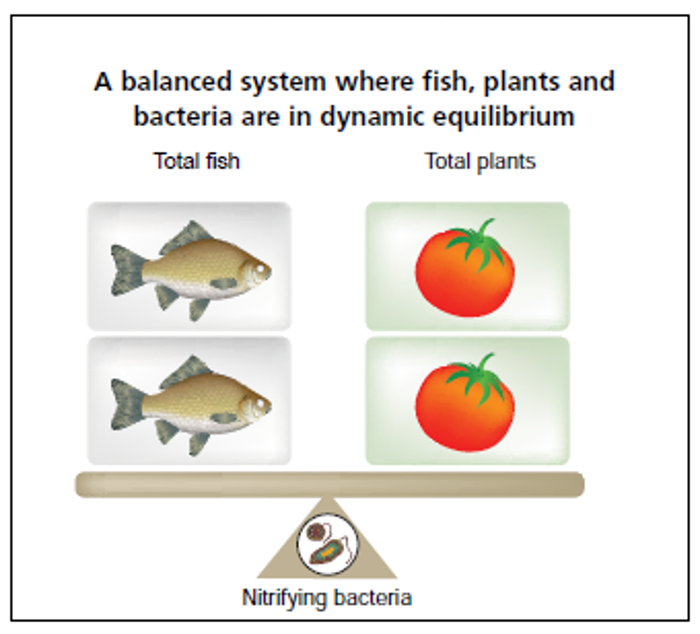
Figure 3. Balance in Aquaponic Systems (Somerville et al., 2014).
As shown in Figure 4, system imbalances occur when the fish biomass exceeds the biofilter capacity, when plant biomass is insufficient, or when plant biomass is excessive.
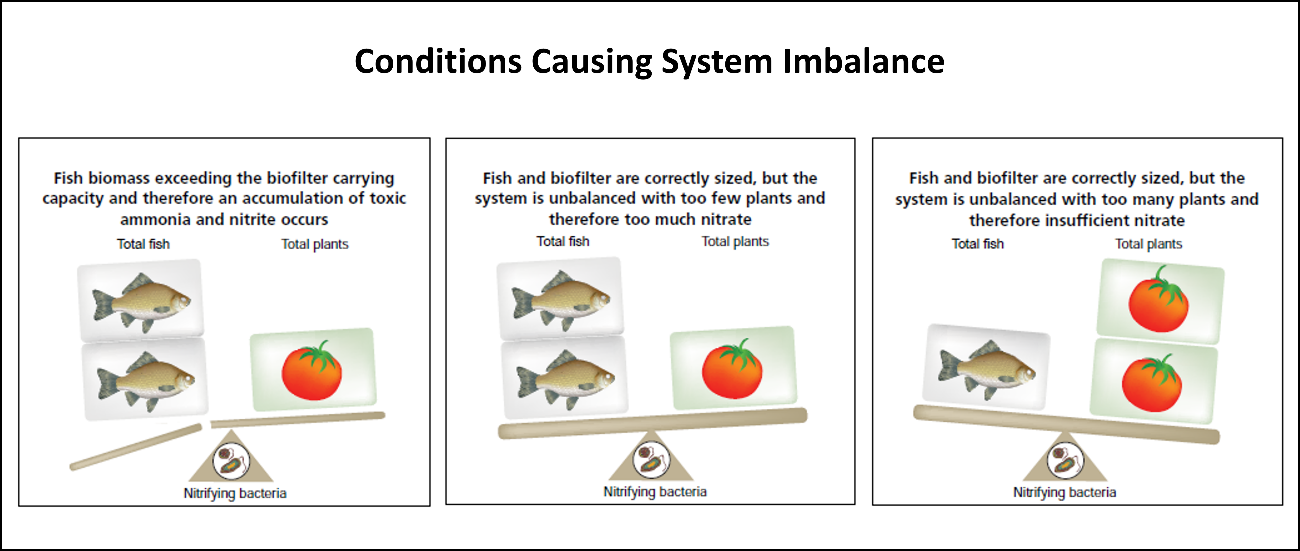
Figure 4. Conditions causing system imbalance (Somerville et al., 2014).
In conclusion, sustainability in aquaponic systems can be achieved not by optimizing a single component, but through the integrated and balanced management of fish–plant–microorganism interactions.
3.9.7.2. Water–Energy–Nutrient Interactions
In the management of sustainable aquaculture production systems, achieving a balance between water conservation and energy consumption is of critical importance. While water use efficiency increases in closed and integrated systems, the associated rise in energy demand demonstrates that sustainability cannot be evaluated based on a single indicator.
In this context, sustainable aquaculture is not solely a technical issue but also a managerial decision-making process. System monitoring, maintenance, risk anticipation, and adaptation to local conditions are integral components of sustainable management.
The balance between water, energy, and nutrients has been evaluated particularly within the framework of water and energy efficiency addressed in Module 15. This module indicates that, while water use decreases in closed and integrated systems, energy demand increases, and this situation requires a balanced assessment of sustainability based on the interaction between water, energy, and nutrient resources. This approach is consistent with FAO (2021), which emphasizes the importance of water–energy–nutrient interactions for aquaculture systems.
3.9.8. Overall Assessment
The overall evaluation conducted within the scope of this module reveals that the sustainable management of aquaculture production systems is a multidimensional process that requires the integrated consideration of environmental, technical, and managerial dimensions. Sustainable aquaculture refers not merely to increasing production volumes, but to planning production processes in a manner that conserves resources, maintains system balance, and ensures long-term production continuity.
The developed modules aim to provide participants with a perspective that enables them to evaluate sustainable aquaculture management at both conceptual and practical levels, while also contributing to the adoption of informed, responsible, and environmentally conscious decisions regarding the future of aquaculture production.
Within this framework, aquaponic systems stand out among the production approaches considered as an integrated production method that supports environmental sustainability. By enabling the effective management and internal reutilization of wastes generated from aquaculture activities, aquaponic systems allow for the establishment of a more efficient and environmentally balanced production structure.
In this context, understanding the effects of treatment units used in aquaponics on water use efficiency, energy consumption, nutrient recovery rates, and sludge management is important for enabling participants to evaluate aquaponic systems from a sustainability perspective. The adoption of low-cost and efficient treatment designs is among the key factors that strengthen the environmental and managerial sustainability of aquaponic production.
The overall evaluation presented in this section demonstrates that the modules developed within the scope of the training program address sustainable aquaculture management within a multidimensional framework. The system design, water management, treatment technologies, and integrated production approaches presented in the modules indicate that the environmental, technical, and managerial dimensions of sustainable aquaculture must be evaluated together. This holistic approach is consistent with the elements identified in the literature as the fundamental principles of sustainable aquaculture management (FAO, 2024).
References
Akuamaks. (n.d.). Ürünler. https://www.akuamaks.com/tr/detail/yumurta-inkubatorleri
Aydın Balık Ağları. (n.d.). Deniz Kafes Ağı. https://www.aydinbalikaglari.com.tr/urundetay/deniz-kafes-agi
Badiola, M., Mendiola, D., & Bostock, J. (2012). Recirculating aquaculture systems (RAS) analysis: Main issues on management and future challenges. Aquacultural Engineering, 51, 26–35. https://doi.org/10.1016/j.aquaeng.2012.07.004
Boyd, C. E. (2015). Water quality: An introduction. Springer. https://doi.org/10.1007/978-3-319-17446-4
FAO. (2021). The water–energy–food nexus: A new approach in support of food security and sustainable agriculture. Food and Agriculture Organization of the United Nations.
FAO. (2024). The State of World Fisheries and Aquaculture 2024 – Blue Transformation in action. Rome: FAO. doi: https://doi.org/10.4060/cd0683en
Fresh by Design. (n.d.). RAS – Recirculating Aquaculture Systems. https://freshbydesign.com.au/aquaponic-aquaculture-products/aquaculture-systems/ras-recirculating-aquaculture-systems/
FPT-Gıda İşleme Teknolojileri. (n.d.). Ürünler,-Balık Sayıcıları. https://www.fpt.com.tr/balik-sayicilari.html
Goddek, S., Joyce, A., Kotzen, B., & Burnell, G. M. (Eds.). (2019). Aquaponics food production systems: Combined aquaculture and hydroponic production technologies for the future. Springer. https://doi.org/10.1007/978-3-030-15943-6
Made-in-China. (n.d.). Ticari Büyük PE Balık Tankları / Akuakültür Taşıma Tankları / Canlı Balık Konteyneri Satışı. https://tr.made-in-china.com/co_zkaqua/product_Commercial-Large-PE-Fish-Tanks-Aquaculture-Transportation-Tanks-Live-Fish-Container-for-Sale_eohenighy.html
Maucieri, C., Nicoletto, C., Junge, R., Schmautz, Z., Sambo, P., & Borin, M. (2018). Hydroponic systems and water management in aquaponics: A review. Italian Journal of Agronomy, 13(1), 1012. https://doi.org/10.4081/ija.2017.1012
Somerville, C., Cohen, M., Pantanella, E., Stankus, A. & Lovatelli, A. (2014). Small-scale aquaponic food production.Integrated fish and plant farming. Rome: FAO Fisheries and Aquaculture Technical Paper. No. 589.
Timmons, M. B., & Ebeling, J. M. (2010). Recirculating aquaculture. Cayuga Aqua Ventures.